
The Indian Wedding Opportunity: What It Actually Takes to Win One
Illume Intelligence | From the Illume Knowledge Series
From Fireside Chat: The Indian Wedding Opportunity — Illume 2026, Jaipur
An FIT luxury traveller and an HNI wedding guest are, in Ekta Saigal Lulla’s phrase, “North Pole to South Pole.” The founder of ESL Events opened this session by drawing the distinction that every hotel chasing Indian wedding business needs to internalise: spending on yourself for luxury and spending on 400 guests while still delivering luxury are two entirely different commercial propositions. A property can be exceptional at one and completely unequipped for the other.
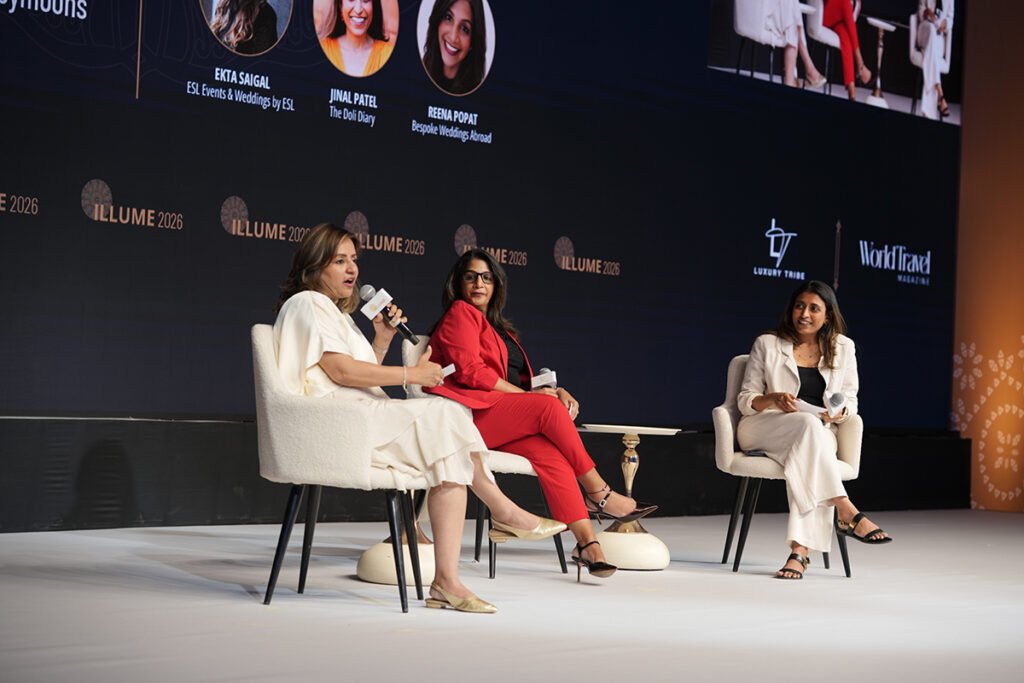
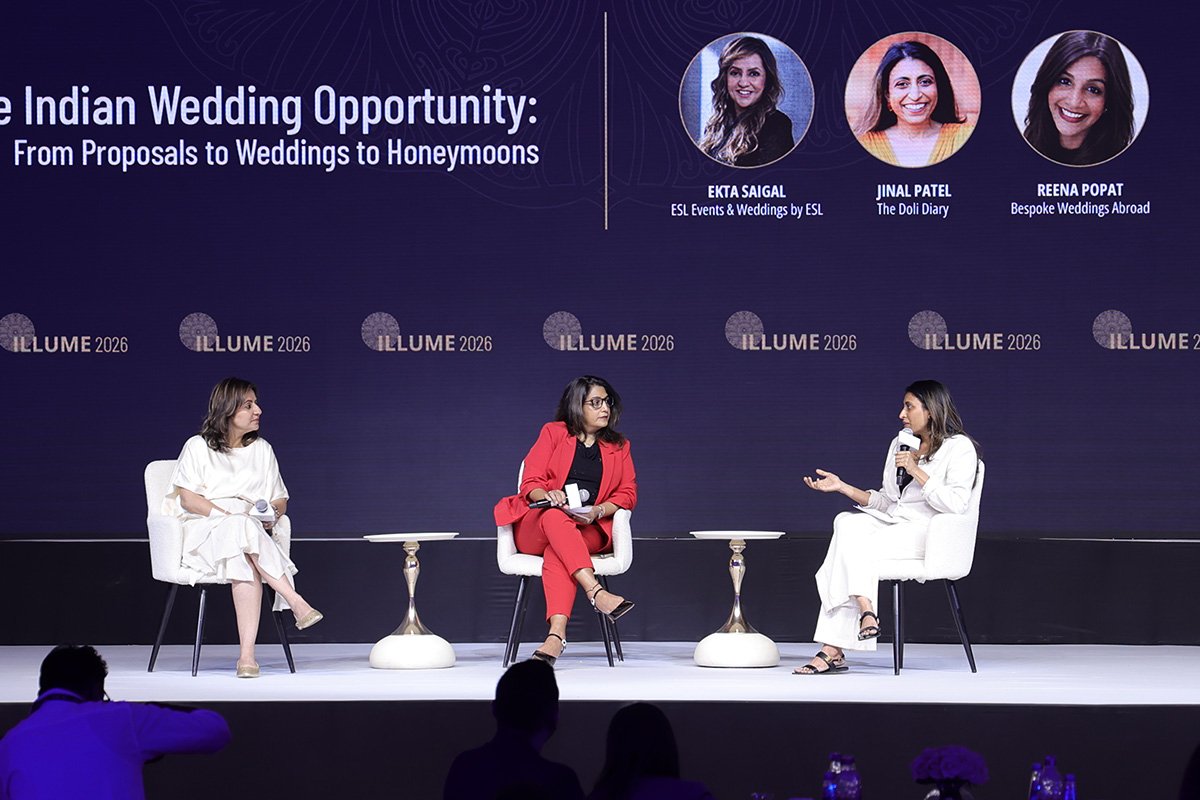
This fireside chat brought together Ekta Saigal Lulla, Jinal Patel of The Doli Diary, and Reena Popat of Bespoke Weddings Abroad, three planners who collectively cover the full spectrum of the Indian destination wedding, from intimate celebrations to thousand-guest productions. What they laid out was less a wish list than an operating manual for any international hotel or DMC that wants to convert and deliver this business rather than merely advertise for it.
The first principle is that an Indian wedding is a multi-day, multi-venue production. No wedding that travels internationally is finished in two events. Multiple events demand multiple venues, and each venue demands exclusivity, because, as Lulla put it plainly, the group is loud, it is there to have fun, it wants music, and it will not compromise on food. Jinal Patel added that Indian wedding groups have no desire to remain inside a single hotel. They want to use villas, dunes, lakeside settings, and to experience the destination as a whole.
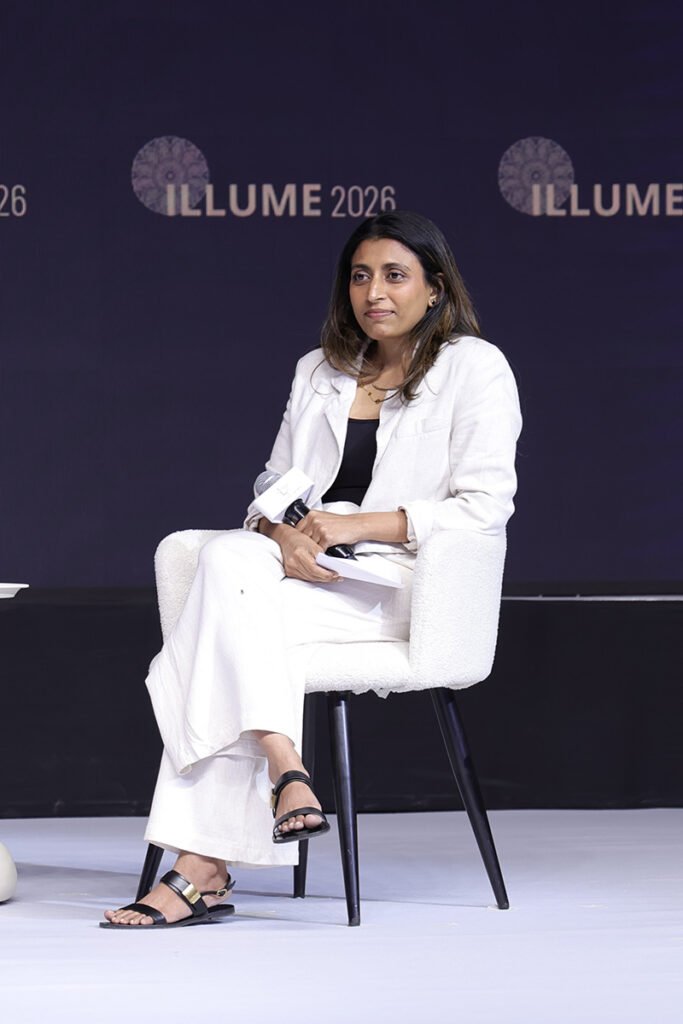
“Trust me — you want to do a buyout to us, because your other guests are not going to be very happy with us.”
— Jinal Patel, Co-Founder, The Doli Diary
This is where the DMC becomes indispensable, and where the strongest properties distinguish themselves. Lulla described a hotelier who was candid about her property’s limits, beautiful rooms, but no outdoor venues to match Indian requirements, and who then proactively offered an estate twenty minutes away with the space, the gardens, and the flexibility to bring in an Indian caterer. That willingness to solve the problem rather than disguise it, Lulla noted, is exactly what marks a destination as worth considering. The model she cited as ideal came from a hotelier named Mario, who offered five connected hotels as a single canvas, breakfast in one, a pool party in another, a beach club in a third, at no additional venue charge. Novel experiences for the guests, sustained revenue for the host.
Food is non-negotiable, and routinely underestimated. No matter where in the world an Indian wedding travels, Indian food is required alongside the local cuisine. The planners look to DMCs to identify local Indian catering or to provide kitchen access and the flexibility to fly in their own teams. The scale of that logistics is real: Lulla described flying in 100 catering staff from India for a single wedding, cooks for different regional cuisines, supervisors, service staff, and their attendants. The most demanding segment, she noted, is also among the biggest spenders.
“The vegetarian Jains are one of the biggest spenders for destination weddings. No onions, no garlic, no potatoes, no root vegetables — and the list is never ending. To offer them variety across nine events in three days is a task even in India.”
— Ekta Saigal Lulla, Founder, ESL Events
The format of service matters as much as the content. Indian wedding guests do not want pre-plated, seven-course sit-down meals. They eat with their eyes, favour buffets, and want to see fifty dishes before they begin. Lulla cited a Singapore hotel that quoted $32 for lunch and $150 for dinner for the same food composition, defaulting to its standard wedding template without grasping what the Indian market actually wanted. And no Indian wedding ends at 10pm. Music runs until the early hours; Lulla has closed afterparties at 6:30 and 7:30 in the morning, with guests heading straight to breakfast and then to the airport. An indoor venue to move into when outdoor noise restrictions apply is a structural requirement, not a contingency.
Reena Popat, whose client base is largely non-resident Indian, added an important refinement: her clients do not want the local destination kept at arm’s length, they want it woven into the wedding itself.
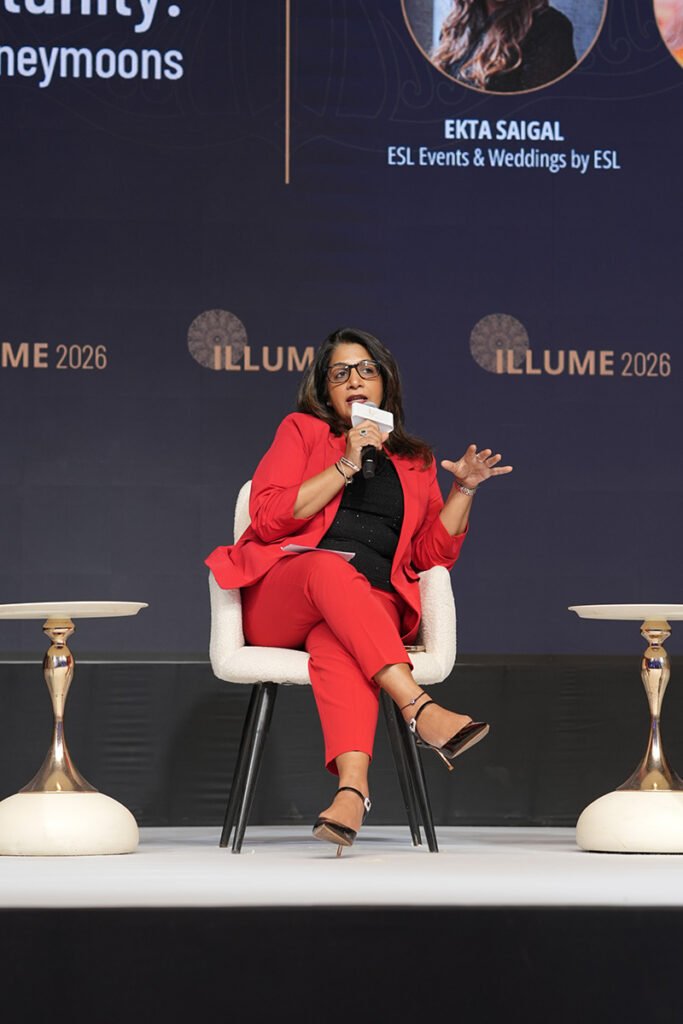
“For my audience, they would love to experience the local cultures, the local traditions. People will say — listen, they have a tomato festival, can we incorporate that into our wedding, because that’s local to the region? From La Tomatina.”
— Reena Popat, Founder, Bespoke Weddings Abroad
Jinal Patel confirmed the pattern, describing a haldi ceremony her team built around La Tomatina, folding the local festival directly into the Indian event. The Indian wedding market is not monolithic, and the DMC’s role is to read which version of it they are serving, and to curate accordingly.
Across all three planners, one request was constant: educate us in advance. Lulla framed it sharply, there are luxury hotels, and there are Indian-wedding-friendly luxury hotels, and not every property in the first category belongs in the second. DMCs who tell planners honestly what a destination can and cannot accommodate save everyone’s time, because an informed planner can filter out the wrong client before energy is spent on both sides.
Visa logistics emerged as a genuine conversion factor rather than an administrative footnote. In a wedding party of 300 or 400, there will be guests who have never had a passport stamped. Bahrain offering group visas free of charge, a Bahraini sales team arranging separate immigration lanes for arriving wedding convoys, a Turkish DMC resolving three rejected visas within 48 hours to save an 800-person wedding, these are the gestures that move business. Value added beyond rooms and food, Lulla noted, is taken very seriously as a reason to bring repeat business.
“He is so well-versed with our requirements that sometimes I feel he sells my Indian client better than any of us can — because he’s gone into understanding the pulse of an Indian HNI client.”
— Ekta Saigal Lulla, Founder, ESL Events
The decisive shift the planners flagged is who now chooses. The young couple makes the destination decision, increasingly driven by Instagram and by emotional connection to a place, and then leaves the parents to negotiate the pricing. For hotels, the implication is direct: if a property has beautiful weddings on Instagram, young couples are already imagining their own event there. The imagery is the top of the funnel.
What the planners ultimately rewarded was anticipation. Lulla described a wedding in Montenegro where, by the third day, the general manager proactively offered a boat ride to an island restaurant, volunteering to forgo one of his own lunches because he could not match the experience the group wanted on site. That instinct to read the group’s needs and move ahead of them is, she concluded, what makes the difference. Indians are easy to please when the fundamentals are right.
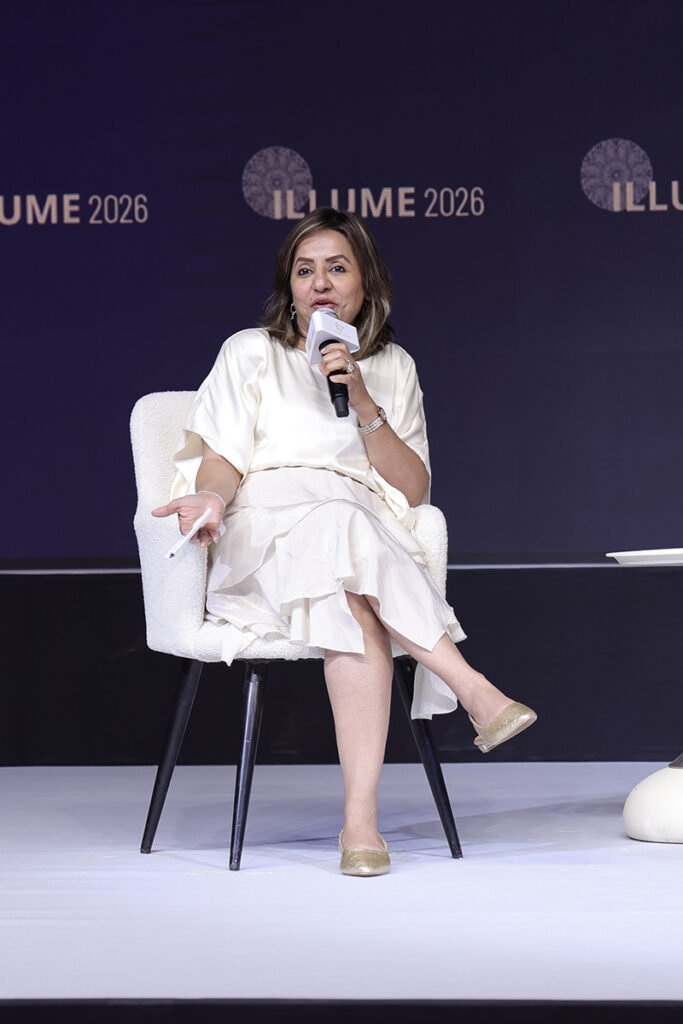
“They just need the right food at the right time and the right hospitality.”
— Ekta Saigal Lulla, Founder, ESL Events
For any hotel or DMC weighing the Indian wedding market, the commercial reading is straightforward. This is among the highest-value segments in global luxury, but it rewards comprehension over capacity. The properties that win are not the ones with the grandest ballrooms, they are the ones that understood the requirements before being asked, and built the flexibility to meet them in.
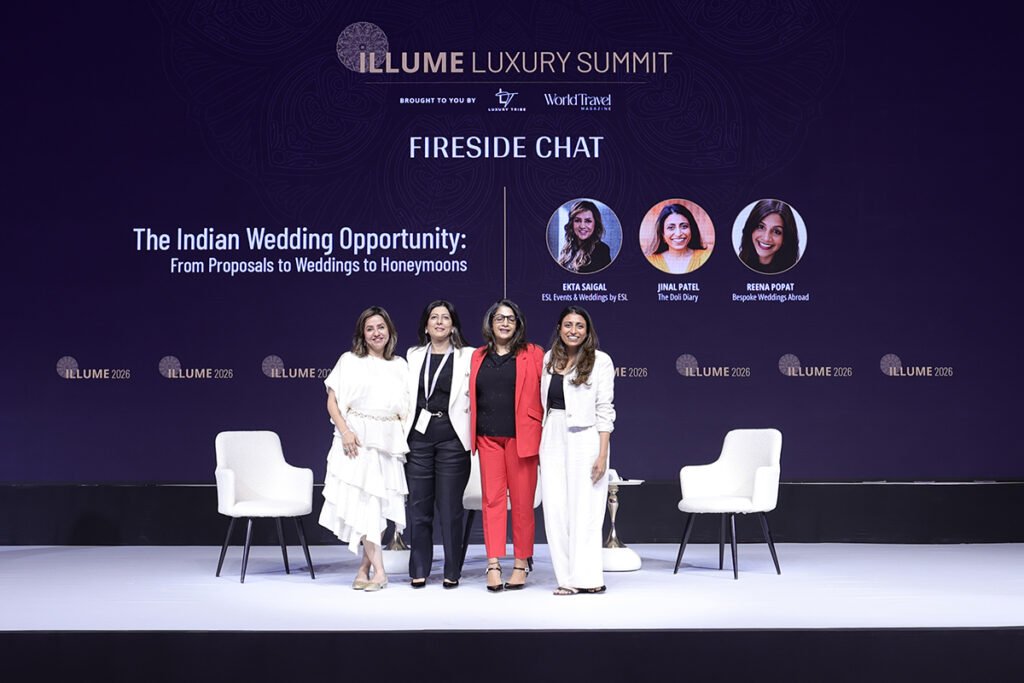
About this session: The Indian Wedding Opportunity was a fireside chat convened to decode what international hotels and DMCs must understand to win and deliver Indian destination weddings, a segment that operates by entirely different rules from FIT luxury. The conversation set out to surface the practical realities: multi-venue exclusivity, the non-negotiable place of Indian cuisine, service formats and late-night celebration, visa logistics as a conversion factor, and the shift toward the couple as decision-maker. It brought together Ekta Saigal Lulla (Founder, ESL Events), Jinal Patel (Co-Founder, The Doli Diary), and Reena Popat (Founder, Bespoke Weddings Abroad). This session formed part of Illume 2026 by Luxury Tribe, held in Jaipur, the invitation-only forum where India’s luxury travel trade speaks candidly about the market it actually operates in.