

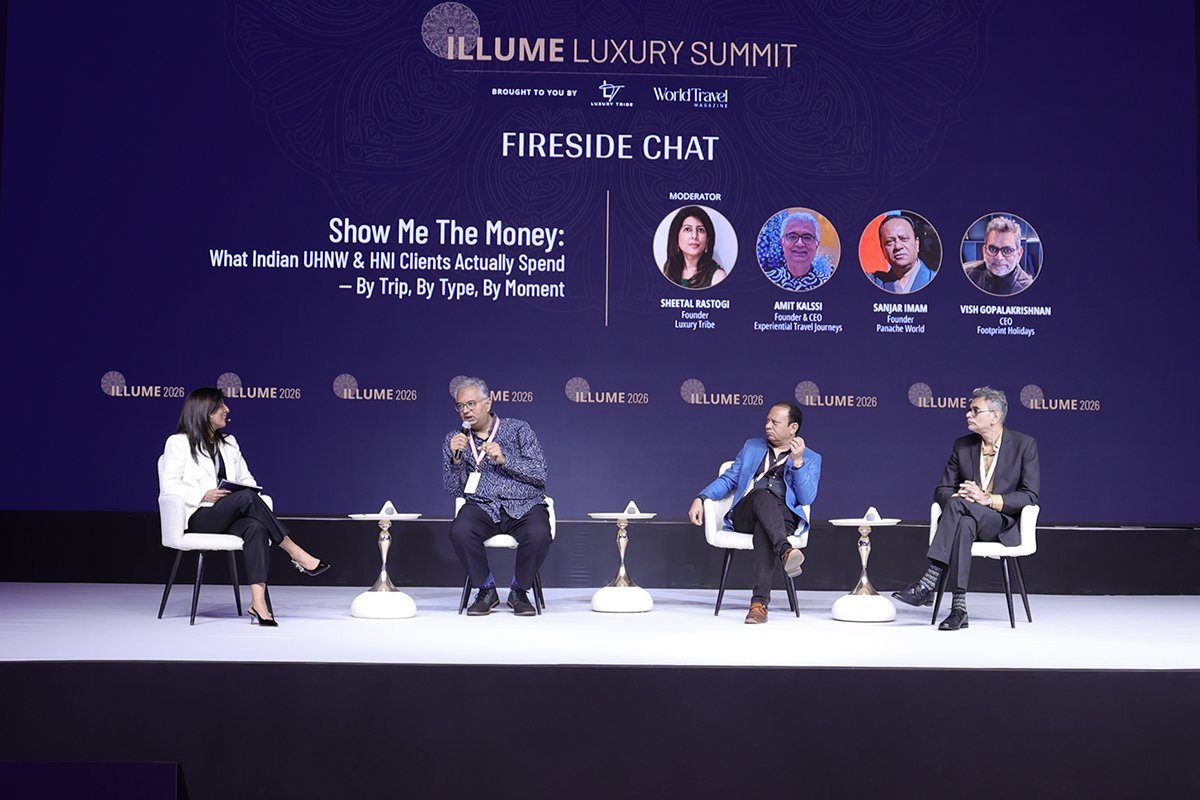
Show Me The Money: What Indian UHNW & HNI Clients Actually Spend
Illume Intelligence | From the Illume Knowledge Series
From Fireside Chat: Show Me The Money — Illume 2026, Jaipur
Ask an Indian ultra-high-net-worth client for his budget at the moment he has decided to charter a private plane, and you will lose the booking. Amit Kalssi, Founder and CEO of Experiential Travel Journeys, put it plainly: at the point of commitment, the budget question backfires. It signals that you are thinking about the transaction while the client has moved on to the experience.
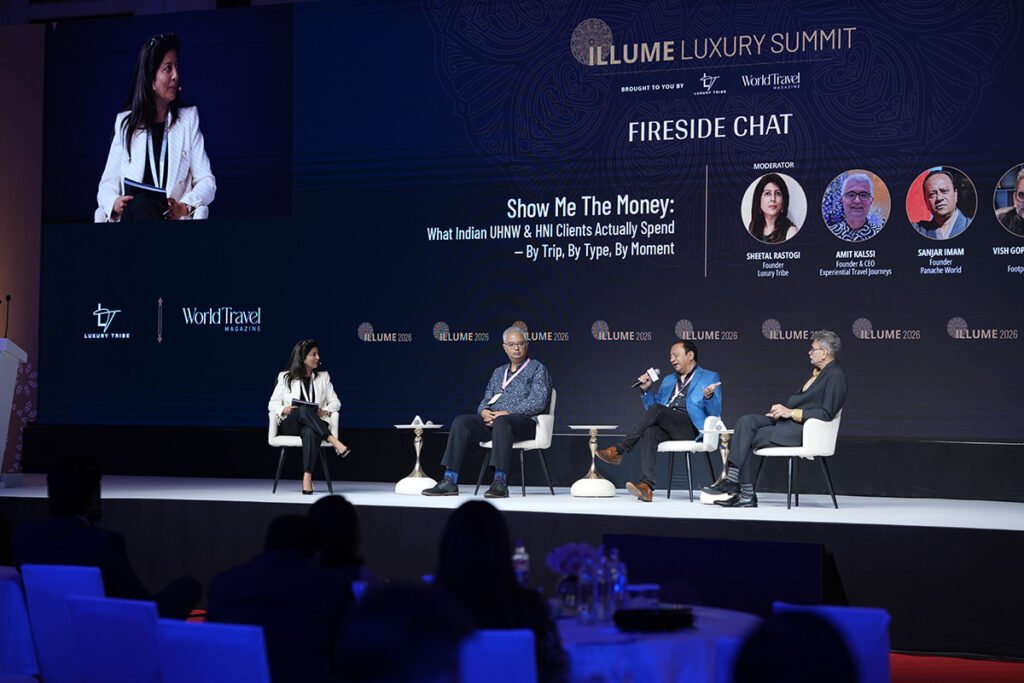
This was the premise of the most financially candid session at Illume 2026, a live budget decode with Amit Kalssi, Sanjar Imam of Panache World, and Vish Gopalakrishnan of Footprint Holidays, moderated by Luxury Tribe founder Sheetal Rastogi. The ground rule was real numbers and real examples, because, as Sheetal Rastogi noted, there is no report in India that captures what the market actually spends. What the three panellists provided was the closest thing the industry has to one.
Amit Kalssi opened with a framework he uses internally: three tiers, mainstream luxury at $1,500 per person per night, true classic luxury at $3,000, and ultra luxury at $6,000. He was immediate in qualifying it. These are filters, not actuals. The real numbers are almost always higher, and with true-luxury and ultra-luxury clients, the budget conversation often never happens at all.
The reason it doesn’t happen is itself instructive. Sanjar Imam identified three dynamics behind why Indian clients rarely state a budget cleanly: a fear of being limited to only what that figure covers; an ingrained negotiating instinct from a community that built its wealth largely through commerce; and a genuine lack of pricing reference, a villa in Tuscany could be €24,000 or €50,000, and most clients have no way of knowing until they are shown. His response is to never ask the budget at all.
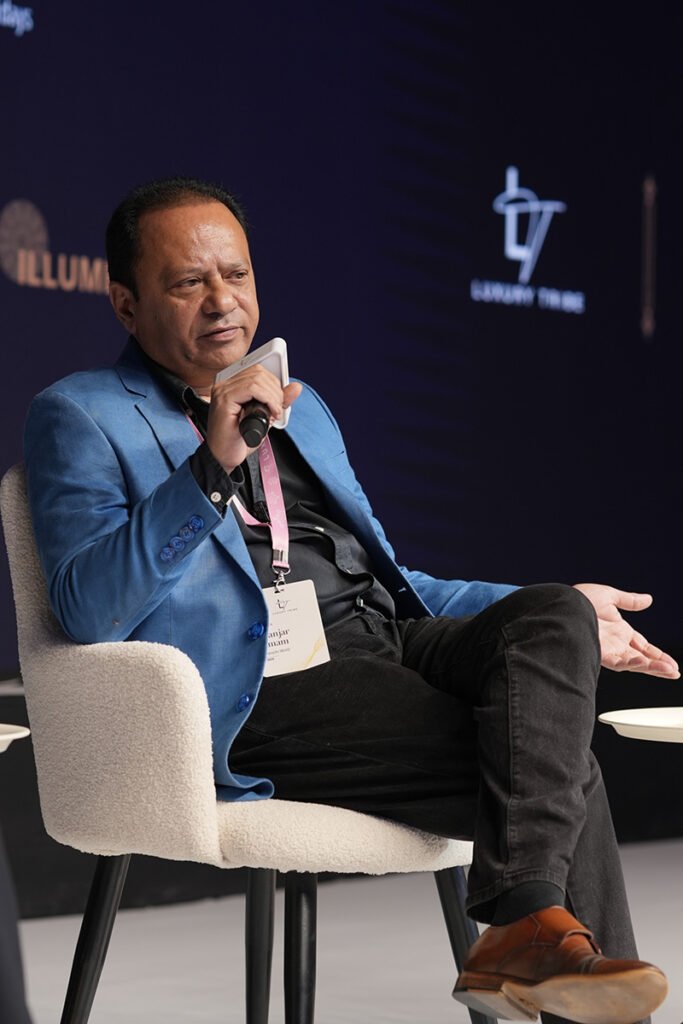
“I don’t ask what’s your budget. I ask what’s this trip about, who’s traveling, what are the things that are non-negotiable. I’ve shifted the whole frame from how much are you going to pay to what do you value — and once they see that, the budget materialises automatically.”
— Sanjar Imam, Founder, Panache World
Who actually controls that budget is rarely a single person. Vish Gopalakrishnan described a collective decision structure: the lead traveller sets the tone and hints at a range rather than committing to a figure; the spouse shapes itinerary flow and accommodation; children of any age hold real authority over experiences, a 10-year-old’s manga itinerary in Japan, a 30-year-old’s Antarctica requirements, and the family office manages payments, documentation, and the financial relationship. He added a detail that should reframe how suppliers think about referral in southern India in particular: the repeat rate is so high that many clients don’t even mention their travels to others. The business compounds internally, not through word of mouth.
The spending itself follows a logic that confounds suppliers who read it through a Western lens. Sanjar Imam described what he called the dynamic most hotels get wrong, the same client who charters a private jet without asking the price will be genuinely offended by a $15 charge for a can of Coke in a €4,000 suite.
“It’s not about the absolute amount. Either throw it in or build it into the room cost. Why get petty about these things? That’s where they get worked up — they feel they are not respected.”
— Sanjar Imam, Founder, Panache World
The principle extends across the entire on-trip experience. Nickel-and-diming a client at this level reads as disrespect, not revenue management. Either include it or fold it into the room cost, but never present it as a separate line item.
On whether there is any ceiling at all, Amit Kalssi was direct: for true-luxury and ultra-luxury clients, there is no upper limit, but every decision is anchored to the specific trip and destination. He described a client willing to fly private from India to Madagascar simply because he had decided that was where the family would go, and his parents’ comfort was non-negotiable. He described a Kailash Mansarovar Yatra where the budget conversation never occurred, execution, time, space, and privacy were the entire brief, with numbers discussed only afterward. The pattern is consistent: once the client has decided he likes something, he will have it irrespective of cost.
Time is the one premium this segment pays almost without exception, provided the value is visible. Vish Gopalakrishnan noted that concierge airport services have shifted from optional to mandatory for this profile, particularly for multigenerational groups travelling with elders and children. But the saving has to be demonstrable.
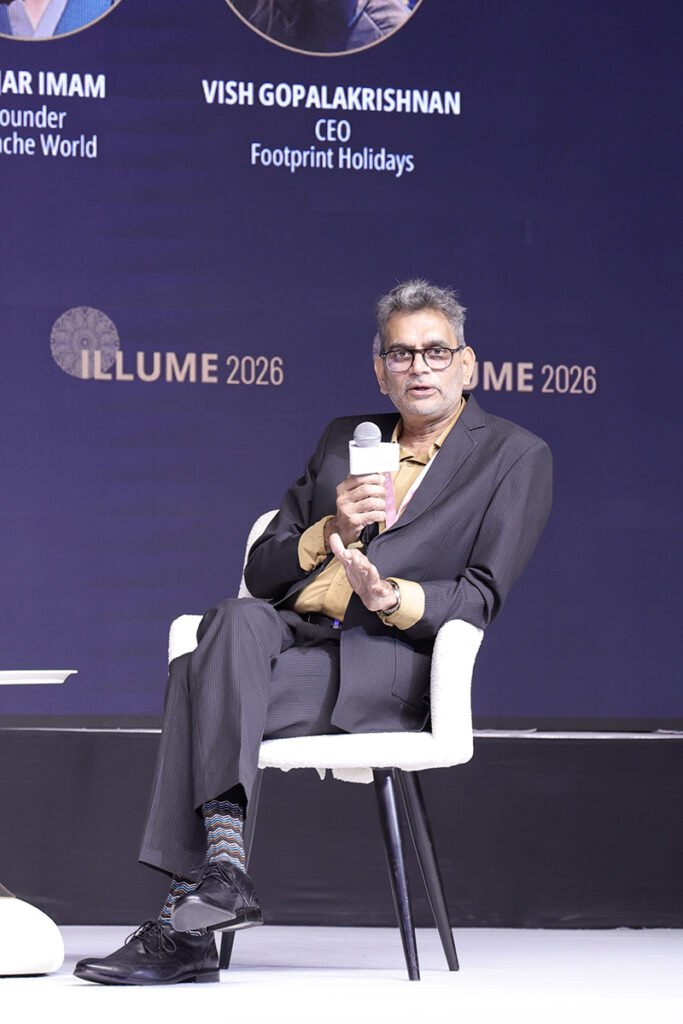
“They may spend a fortune on a holiday, but if they only see they’re going to save 10 minutes, that’s not appreciated. Give them a significant two-hour saving and it makes sense — then they don’t mind spending it. There has to be a clear demonstration of the value. In 80 to 90% of cases, they’ll go for it.”
— Vish Gopalakrishnan, CEO, Footprint Holidays
The session’s most commercially important argument concerned how the industry measures a client at all. Sanjar Imam made the case that hidden spend is only hidden because it is being viewed through the wrong lens, through room revenue and ADR rather than lifetime value.
“It’s never about room revenue. It’s never about ADRs. A relationship that started with a $3,000 trip to Cambodia has built to $1.5 to $2 million already with Panache. That multiplier — it’s like 500x, traceable back to a single trip.”
— Sanjar Imam, Founder, Panache World
Amit Kalssi reinforced the point from the supply side. A Four Seasons in Bangkok told him they valued his clients not for their room rates but for what they spent while staying, including one family that booked out the entire spa for the duration of their visit. He flagged the structural gap this exposes: travel designers drive that ancillary spend but earn no commission on it. Sheetal Rastogi extended the thought, Indian clients at a luxury resort will dine in the best restaurant and visit the bar most evenings; there is a case for designers and planners sharing in the value they demonstrably generate.
What ultimately secures a decade-long relationship, all three agreed, is not pricing or product but conduct, most sharply revealed under pressure. Amit Kalssi described handpicking his suppliers based on Covid-era behaviour: those who refunded without argument, extended credits without time limits, and resumed business with the same trust earned his loyalty for life. Sanjar Imam described a DMC who refunded a twice-postponed trip in full, waived the cancellation fee, and said only “inshallah in the future” a relationship now fifteen years old.
Vish Gopalakrishnan described the inverse, a high six-figure booking multigenerational booking to South Africa where a DMC delayed issuing tickets for ten days, the price escalated, and an agreement not to mark up the fares was quietly broken.
“We told them — don’t do your markup on the tickets. They said they wouldn’t, but they did. And the client was clever enough to find it out. These are the things that let you down. Once a DMC puts themselves in our shoes, that relationship lasts for decades. This one broke.”
— Vish Gopalakrishnan, CEO, Footprint Holidays
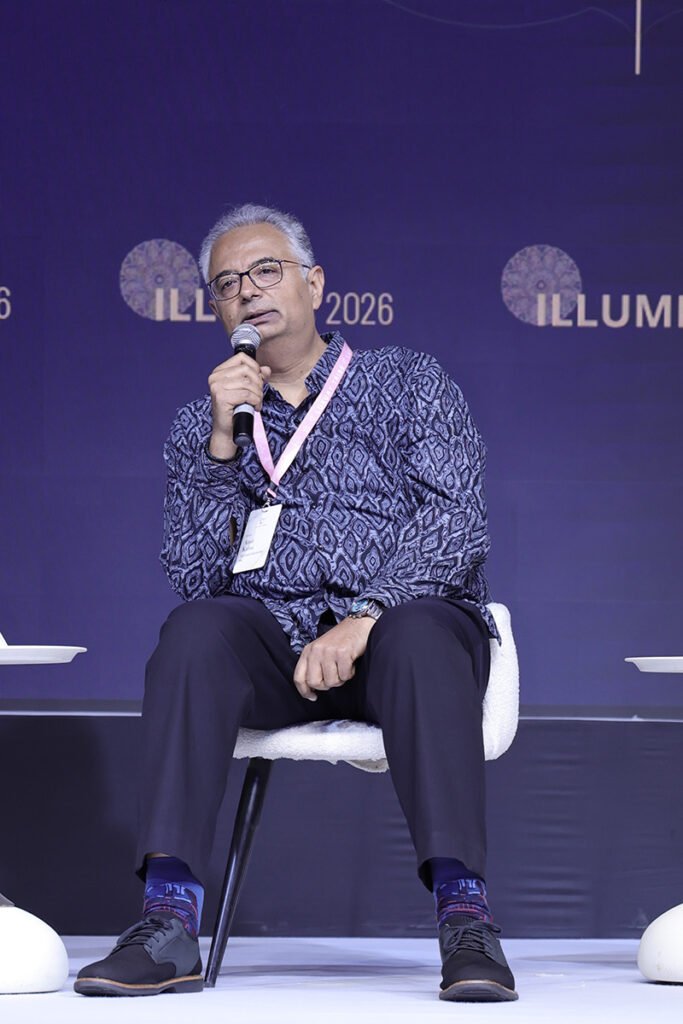
“India is a people’s economy. It’s all about relationships. Business follows — not the other way around.”
— Amit Kalssi, Founder & CEO, Experiential Travel Journeys
For suppliers, the commercial reading is uncomfortable but clear. The Indian luxury client will spend without a ceiling when the conditions are right, time protected, value visible, respect intact, transparency absolute. The number is rarely the obstacle. The relationship is the whole game, and it is decided long before the invoice is sent.

“Relationship is extremely, extremely critical to any business deal in India — irrespective of the size or the value of the file.”
— Sheetal Rastogi, Founder, Luxury Tribe
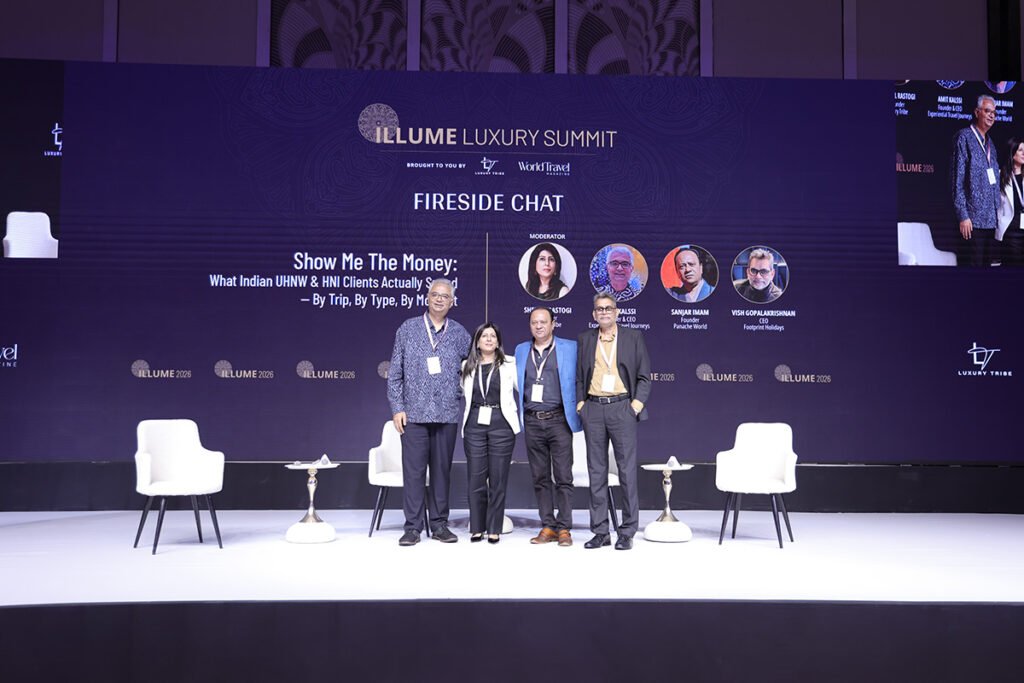
About this session: Show Me The Money was a fireside chat convened as a live budget decode: an unusually candid attempt to establish what India’s UHNW and HNI travellers actually spend, in a market with no published data to reference. The conversation set out to surface the real numbers and the psychology behind them, the tiered budget filters, why clients rarely state a figure, collective family decision-making, the spending paradoxes that confound international suppliers, and lifetime value as the metric that matters. It brought together Amit Kalssi (Founder & CEO, Experiential Travel Journeys), Sanjar Imam (Founder, Panache World), and Vish Gopalakrishnan (Footprint Holidays), moderated by Sheetal Rastogi (Founder, Luxury Tribe). This session formed part of Illume 2026 by Luxury Tribe, held in Jaipur, the invitation-only forum where India’s luxury travel trade speaks candidly about the market it actually operates in.