
India’s Wealth Map 2026: The Next Cities, The Next Millionaires
Illume Intelligence | From the Illume Knowledge Series
From Panel: India’s Wealth Map 2026 — Illume 2026, Jaipur
Visa reads India’s wealth through the card swipe. Axis Bank reads it through the relationship manager’s client book. At Illume 2026 the two datasets were put side by side, and they drew the same map: India’s affluence has moved well beyond the cities where the global luxury industry has spent two decades looking for it.
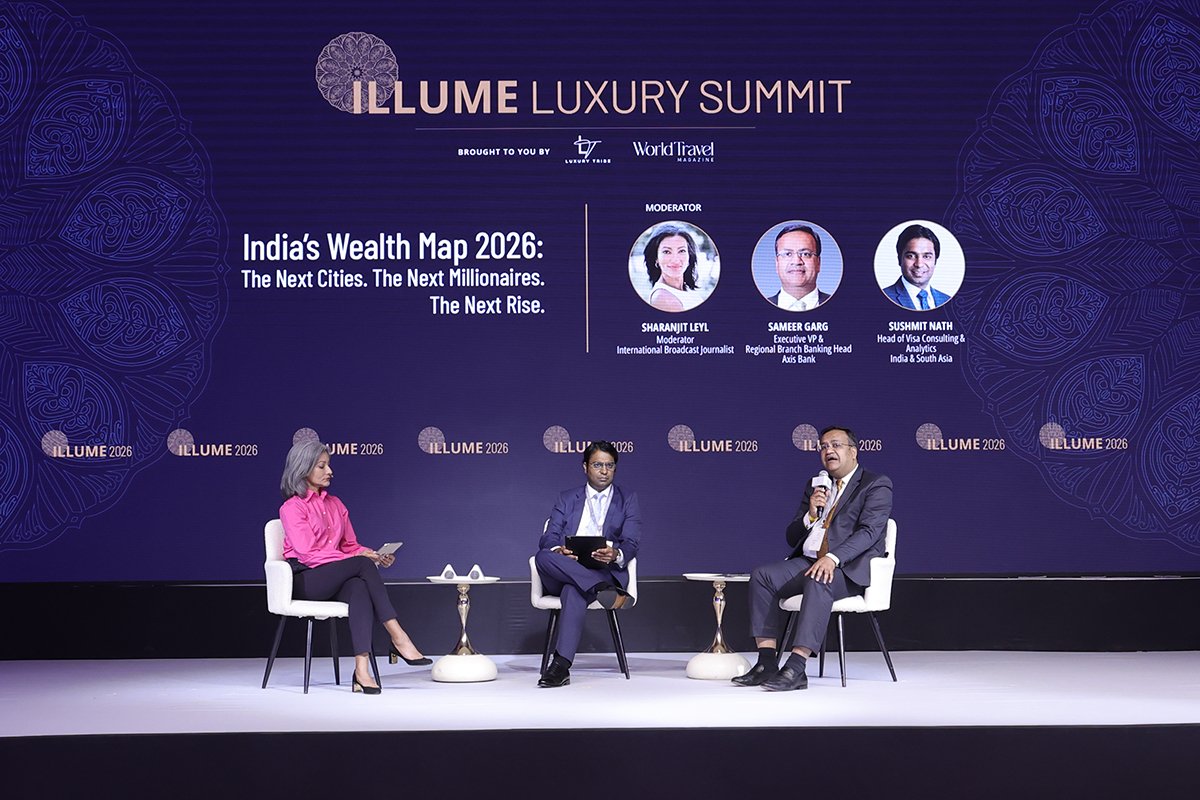
Moderator Sharanjit Leyl opened by asking Sushmit Nath, Head of Visa’s Advisory Practice for India and South Asia, and Sameer Garg, Executive Vice President and Regional Branch Banking Head at Axis Bank, where wealth is accelerating fastest outside the Delhi–Mumbai–Bangalore axis. Nath answered from payments data. Indian affluence, he said, is “thickening”: the number of people earning more than ₹50 crore has doubled from 4,000 to 8,000 in the last couple of years, and card spend in Ahmedabad, Surat, Jaipur, Lucknow, Nagpur and Vadodara has risen sharply against the metros and Tier 1 cities. He also named the engines behind it: export-oriented SME clusters, professional services, real-estate premiumisation, startup liquidity events, and a fast rise in equity participation, with 18.5% of Indian households now invested in the market. Visa’s phrase for the result is affluence being democratised.
Garg’s banking view confirmed it and put a size on it. Ninety-three percent of the wealth accumulation Axis is tracking is forming beyond the top five cities, and close to 35% of luxury travel spend already comes from customers outside Delhi, Mumbai, Bangalore, Hyderabad and Chennai.
“Wealth definitely is moving to clusters beyond the top five cities. We see this trend continue to 52-odd cities, and these are the new wealth corridors. One-third of India is not in the top five cities — and that’s where we will find the next customer who is travelling.”
— Sameer Garg, Executive Vice President, Axis Bank
Nath’s portrait of who holds this wealth is the part international suppliers most need to absorb. The new affluent beyond the metros arrived by a different route from the old money, and they think about spending differently as a result. Because they entered affluence through formal, digital financial channels, their consumption shows up clearly in transaction data, which gives the industry an unusually precise read on what they want.
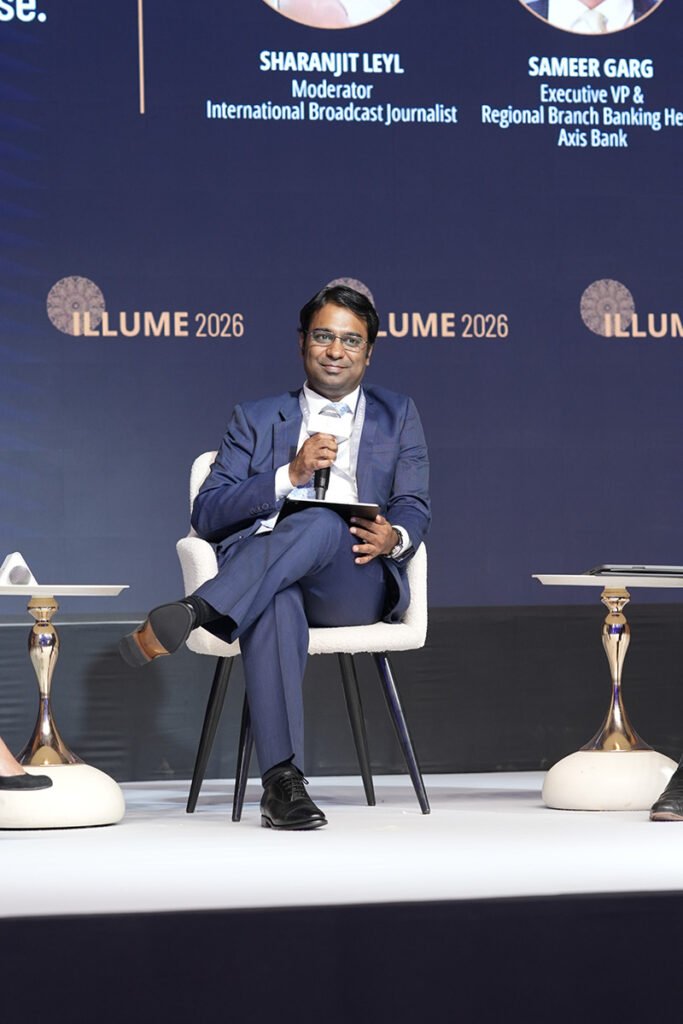
“They are predominantly first-generation wealthy — entrepreneurs, traders, professionals, MSME owners. Their aspirations are global from the outset. They are seeing the world, they are hyperconnected, and they don’t have to go through the journey the affluent in the traditional metros have gone through.”
— Sushmit Nath, Head of Visa’s Advisory Practice, India & South Asia
Garg warned against treating this as one market. Pune’s wealth is concentrated in its IT corridors, among young technology professionals whose spending choices differ from those of, say, Ludhiana, where agricultural wealth flows into a different set of luxuries and assets. Taste, in his words, will be “very vast and very diverse,” depending on the city and on which persona is making the decision.
On how this money is spent, Nath said the strongest signal in Visa’s data is intentionality. Affluent Indians are concentrating on high-value experiences that reinforce identity and status, and they are doing it more often: three in four make a high-end purchase at least once a quarter, and one in four every two weeks. He called this the routinisation of luxury. Among elite and ultra-elite consumers, travel now takes about half of discretionary card spend, and 63% of their card spend happens outside India. Dining, he added, has become a social and professional currency in its own right. He cited clients who ask a Michelin-starred restaurant in France for a vegetarian meal the menu doesn’t offer, and noted that the best restaurants deliver it.
Garg described the same shift in banking terms, as a move from ROI to ROX, return on investment to return on experience. Clients who once put surplus wealth into gold and real estate are now putting it into experiences, with family travel at the centre. They are also internationalising their balance sheets. Most of Axis’s HNI clients, he said, now hold wealth in at least one offshore location alongside their domestic base, and they use the Liberalised Remittance Scheme for far more than children’s education or medical costs. Art collections, watches and second homes abroad all show up in travel-card and remittance flows. For a hotel or destination, that means the guest is often already partly rooted overseas before the first booking.
Garg’s most vivid evidence came from below the traditional HNI line. He described a conversation with someone who, flying back from Singapore in business class, found himself next to a middle-income family of four on their first international trip. The family had skipped the usual progression from economy to business over a number of years and gone straight to the front of the plane. Post-Covid, Garg said, life events have changed people’s priorities, and the middle class is moving towards affluent experiences faster than expected. He added a second signal from the bank’s lending book: Gen Z customers are taking personal loans while working and spending the money on travel and flights, which was not what those loans used to be for. Leyl summed up the mood: people had to stay home, so now that they are travelling, they intend to do it in style.
Where the panellists agreed most firmly was on how this consumer is reached. Garg was clear that brand alone does not carry the decision.
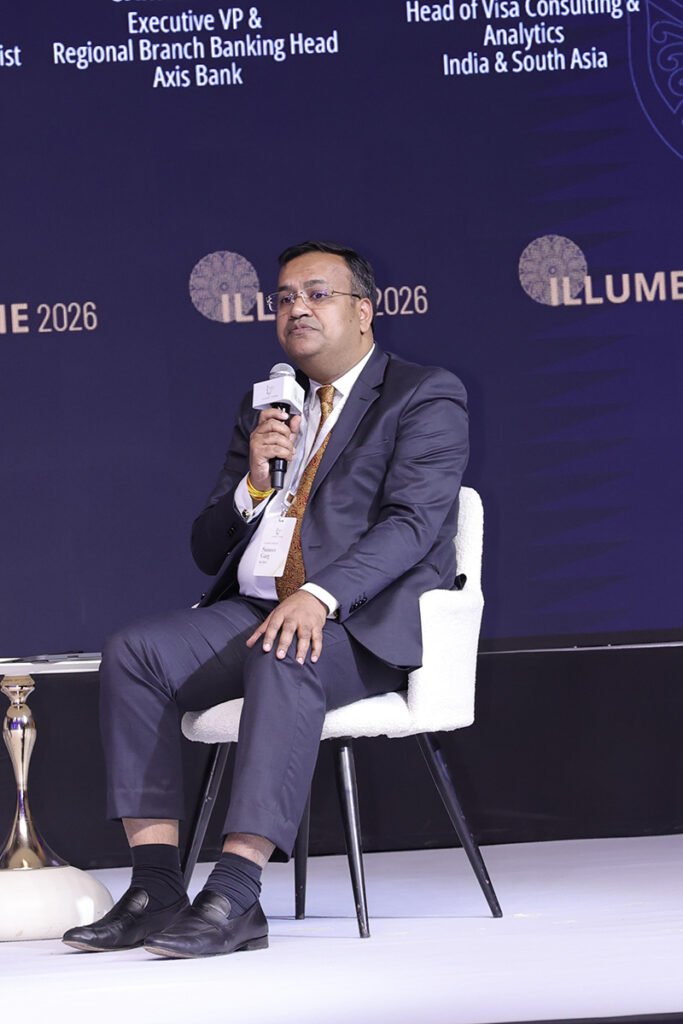
“Apart from what the brand brings — how is the introduction being made to you, what’s your connection with the person making that introduction, and the authenticity of that introduction.”
— Sameer Garg, Executive Vice President, Axis Bank
A great deal of this travel happens within circles of friends and family, he said, and influencers have emerged as a distinct category shaping choices, ranging from Bollywood and sport to people who influence for a living. Nath added that for this segment luxury is increasingly defined by access over ownership, from elite club memberships to limited-edition drops and pre-sale concert windows, and that DIY booking falls sharply as affluence rises. Asked whether AI would eventually take over curation, he answered with a point about exclusivity: if a tool can do it for everyone, it loses value for the people at the top. “This group of people want something that’s exclusive, that’s done for them, that’s truly specialised.”
Both men landed on the same warning: the supply side is behind. Nath said consumption in Tier 2 and Tier 3 cities, particularly in travel, dining and premium retail, is converging with the metros very quickly, and the industry has not adjusted. He said the demand for rare experiences has spread well beyond the small group that used to want them.
“Money can’t buy used to be for a very small segment of the population. It’s still important — but the base that’s looking for those kinds of experiences has grown significantly, and there’s a lot of disposable income now to be spent on them.”
— Sushmit Nath, Head of Visa’s Advisory Practice, India & South Asia
He illustrated the gap with a data point shared with him: on one popular global experiences platform, the total number of listings for all of India is lower than the number for Phuket alone.
Leyl closed by asking each panellist for the one headline delegates should take back to their boardrooms. Garg’s was direct.
“Bespoke experiences, and not undermining the paying capacity of an Indian traveller overseas.”
— Sameer Garg, Executive Vice President, Axis Bank
He called India a “continentized” country where no single trend holds across regions, and urged the industry to study each of the 52 emerging cities as seriously as it studies an outbound destination. Nath’s headline was that India’s affluent consumer is now defined by behaviour more than by income or geography, and that the next wave of growth will belong to those who read these signals early and build the ecosystems where these consumers can spend and evolve.
For international hotels, DMCs and destinations, the two datasets point to the same conclusion. The wealth has spread out, the spend is already flowing from cities most brands cannot name, and the people holding it arrive informed, globally minded and well able to pay. The brands that build relationships in these corridors now, introduction by introduction, will be the ones those clients trust when they travel.
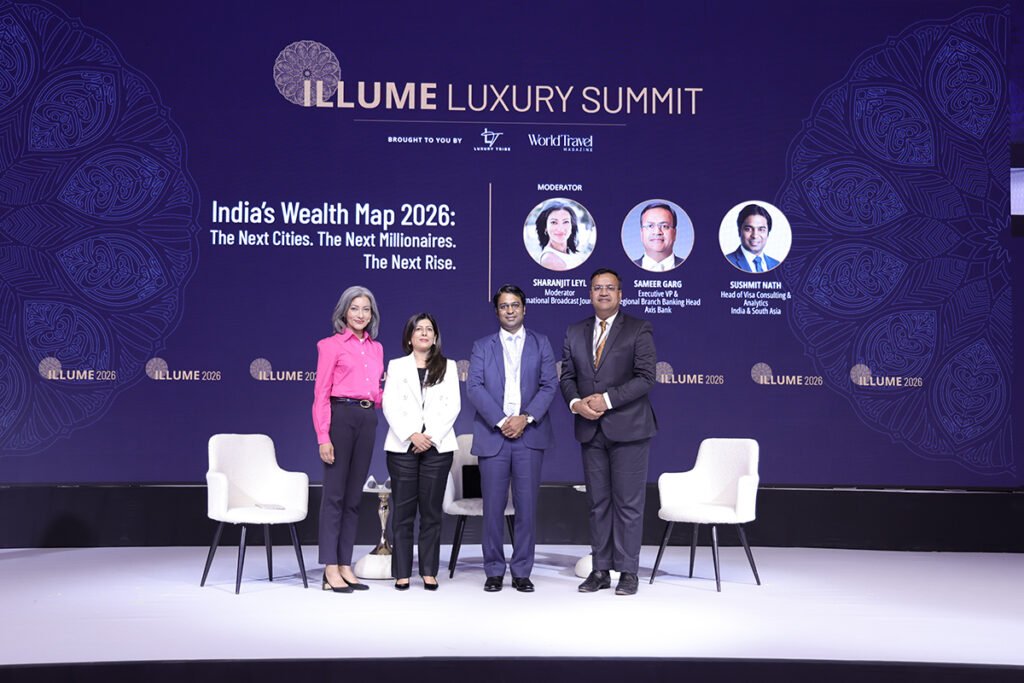
About this session: India’s Wealth Map 2026 was a panel convened to locate where India’s affluence is actually forming and how it is being spent, moving past the familiar metro narrative to the corridors driving the next decade of growth. The conversation set out to surface the geography and behaviour of new wealth: the emerging Tier 2 and Tier 3 cities, the first-generation affluent, the shift from accumulation to experience, and the supply-side gap the industry has yet to close. It brought together Sameer Garg (Executive Vice President, Axis Bank) and Sushmit Nath (Head of Visa Consulting & Analytics, India & South Asia), moderated by Sharanjit Leyl. This session formed part of Illume 2026 by Luxury Tribe, held in Jaipur, the invitation-only forum where India’s luxury travel trade speaks candidly about the market it actually operates in.