
Jaipur Unfiltered: What Luxury Travellers Truly Seek and Why India Is Finally Ready to Deliver
Illume Intelligence | From the Illume Knowledge Series
From Panel: Jaipur Unfiltered — Illume 2026, Jaipur
The most useful thing about this panel was who was sitting on it. Ajaita Shah, Geetanjali Kasliwal, and Shan Bhatnagar are not hospitality consultants describing the luxury traveller from the outside. They are the luxury traveller, seasoned, global, exacting, and they are also among the people who have spent their lives building what Jaipur offers to that traveller. When they describe what effortless service feels like, they are describing what they themselves refuse to do without.
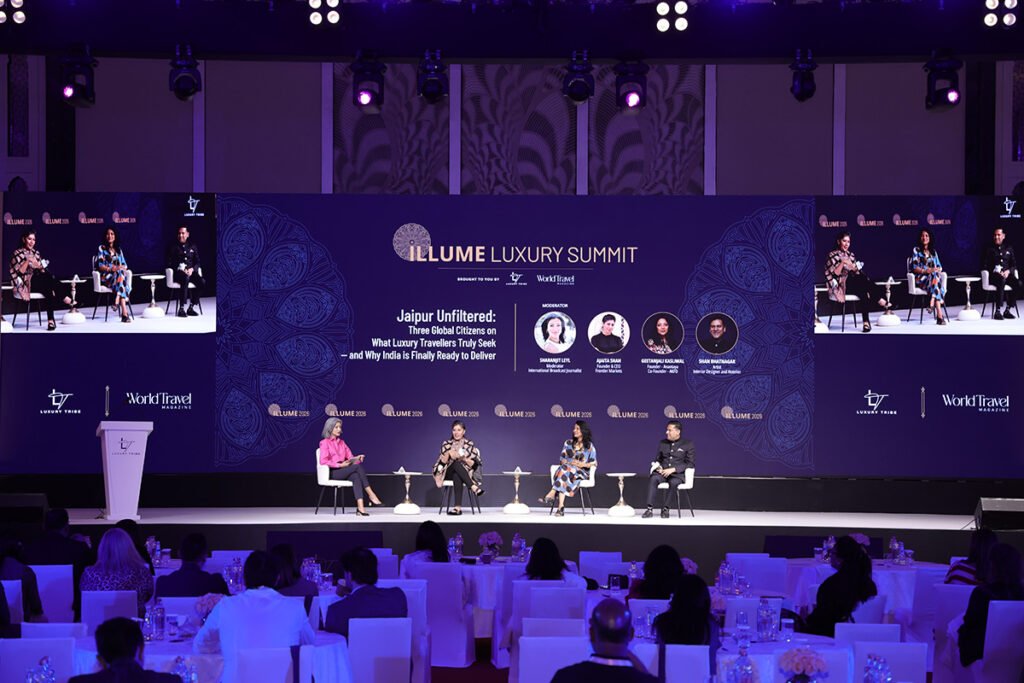
That dual vantage gave the conversation, moderated within Illume 2026, a candour that recap-level coverage tends to flatten. What luxury travellers at this level want turns out to be deceptively simple to name and genuinely difficult to deliver.
The first requirement is to be understood. Geetanjali Kasliwal, founder of Anantaya, put it in the language of someone who has lived in large Indian families her whole life, accustomed to reading the slightest raised eyebrow, accustomed to being looked after.
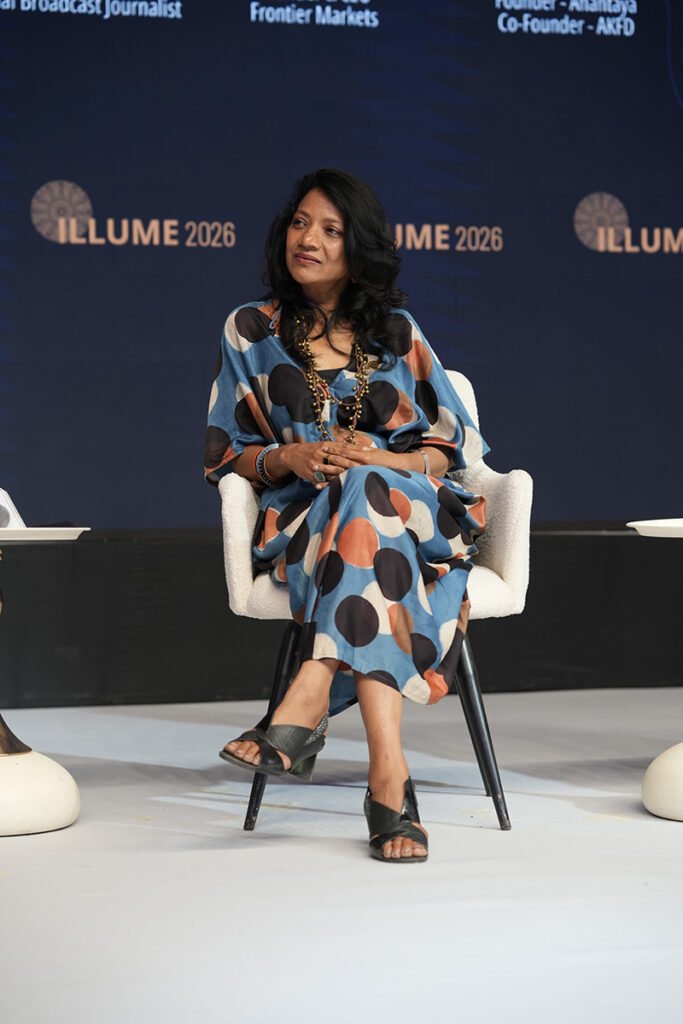
“We want to feel understood. It’s not about the theatrics, not always about the scale — it’s about having an authentic experience that’s comfortable, luxurious, makes you feel at home, and yet gives you an insight into a deep culture.”
— Geetanjali Kasliwal, Founder, Anantaya
The second requirement is restraint. Shan Bhatnagar, artist, interior designer, and hotelier, described the service he values abroad as the kind where staff are invisible until needed and present the moment they are. Over-fussing, he said, he finds annoying. The skill is to be there and not be there at once.
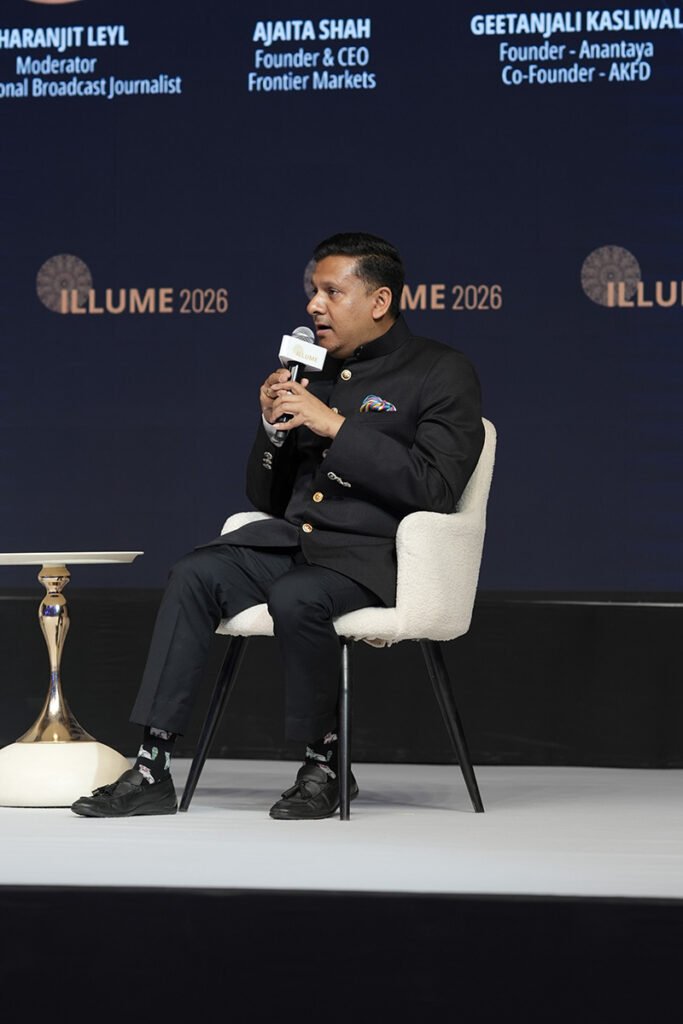
“What I like when I travel is effortless service — where the staff is invisible, but it’s there when you need them. When there is a refined restraint, that is really crucial when you’re travelling.”
— Shan Bhatnagar, Artist, Interior Designer & Hotelier
The third is authenticity that is lived rather than staged. Bhatnagar wants experiences led by someone who has actually lived in a place and can explain its spirit, not something scripted and identical for everybody. Kasliwal drew the distinction sharply through her own travels: Egypt, she said, felt museum-like and transactional, entered with a ticket, while Jaipur felt like it was giving something to her. For this traveller, value is not the same as expense. The question is what the destination returns.
That standard is exactly what makes Jaipur, in their telling, more than a backdrop. Bhatnagar reframed the city as a piece of deliberate design, built as a craft city around 36 original karkhanas, the chhattis karanas, to which the founder invited craftsmen to settle. Kundan and meena, block printing, kite-making, marble sculpture, miniature painting, these survive not in museum cases but in the streets, in workshops, in their natural habitat. What distinguishes Jaipur from any other Indian city, he argued, is that this is a continuous living heritage, three centuries unbroken. His verdict on how the trade currently packages it was pointed: a two-day itinerary is not enough; the city deserves five.
Kasliwal named the frame the whole panel was circling, conscious luxury. Luxury, for her, is not the price; it is the care, the texture, the aesthetic, the cultural context. And the future patron, she argued, is hunting precisely for these lived-in, authentic experiences rather than for the off-the-shelf version.
Ajaita Shah, eighth-generation of a 300-year-old Jaipur family and founder of Frontier Markets, connected that idea to a commercial opportunity most international operators miss entirely. She described converting a 300-year-old family haveli into a boutique hotel with a specific intention: to braid together a luxury stay in the old city, the family’s jewellery legacy, and the social reality of rural India, guests eating with village women who cooked from their own kitchens, understanding impact alongside indulgence. The audience for this, she argued, is not niche.
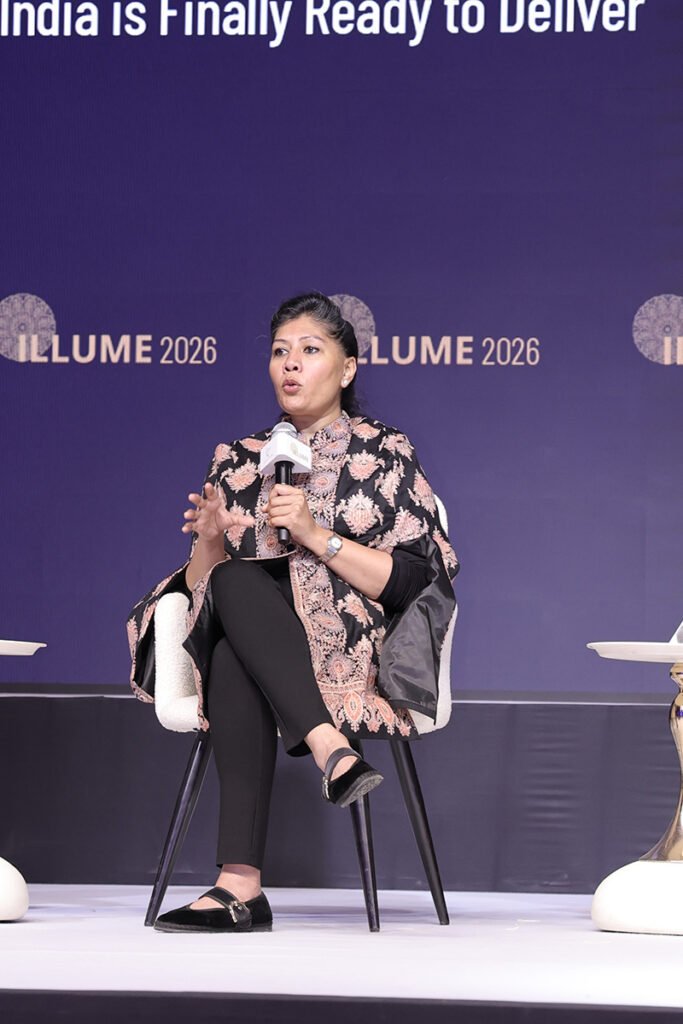
“There are now at least 10 million entrepreneurs in this country who would spend to have a luxury experience that makes them feel whole, but also productive and connected.”
— Ajaita Shah, Founder & CEO, Frontier Markets
The panel’s sharpest warning was directed at international luxury brands now circling Indian heritage. The instinct, Shah said, is to acquire, to buy the boutique hotel, buy the haveli, and the instinct is wrong.
“The biggest mistake they make is they think they can buy the haveli. You can be a partner and then understand value. This world of people is very well connected.”
— Ajaita Shah, Founder & CEO, Frontier Markets
Kasliwal extended the point to how the craft itself should be engaged: artisans as co-creators, not vendors, “universities in themselves,” with the designer merely a facilitator. Bhatnagar’s version was about the building itself. Too many new hotels, he observed, now look as though they could belong anywhere in the world. A property has to tell its own story, and that requires real research, coming to a place, learning its culture and craft and living heritage, and putting that into context, rather than the superficial kind.
Asked about AI, the panel was unbothered and clear-eyed. Shah sees it as a genuine tool for efficiency, research, and curation that does not remove emotion from the work. Kasliwal’s caveat was that something made by hand carries more authenticity and more energy, and that the burden therefore shifts to the curator. The taste-maker, she said, has to refine their eye for what is authentic, because in a world of endless options, discernment is the differentiator.
For the international trade, Jaipur Unfiltered lands as something more demanding than a destination pitch. The travellers at the top of this market want comprehension, restraint, and authenticity that was actually built rather than borrowed, and the places best positioned to deliver it are the ones with genuine living heritage and the humility to partner with it rather than purchase it. The brands that grasp this will earn a market that, as Shah noted, is unusually well connected and unusually quick to know the difference.
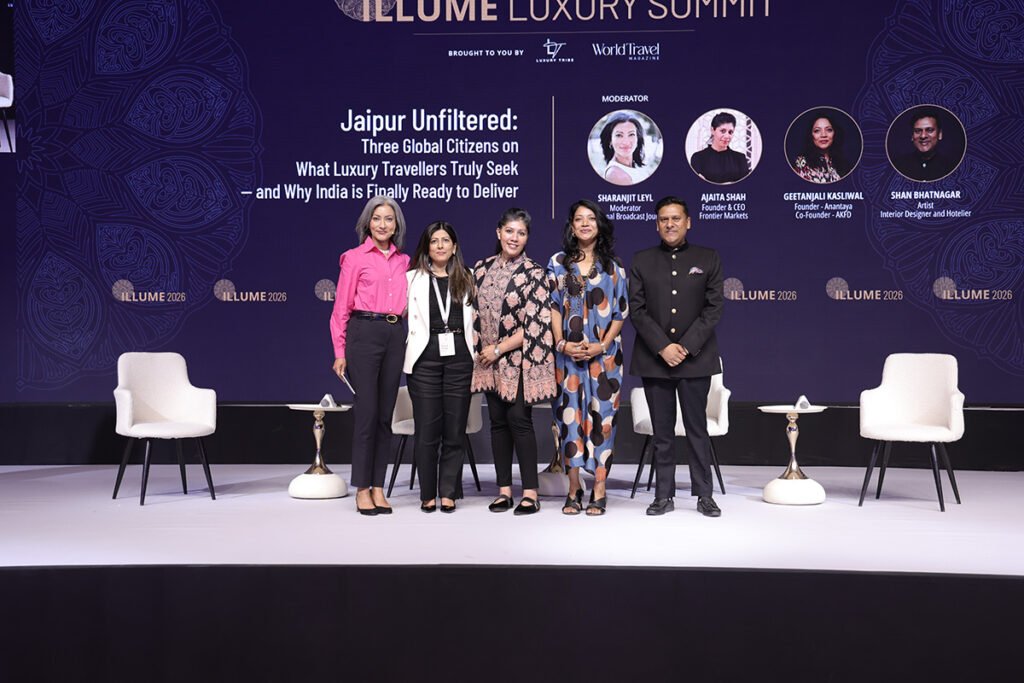
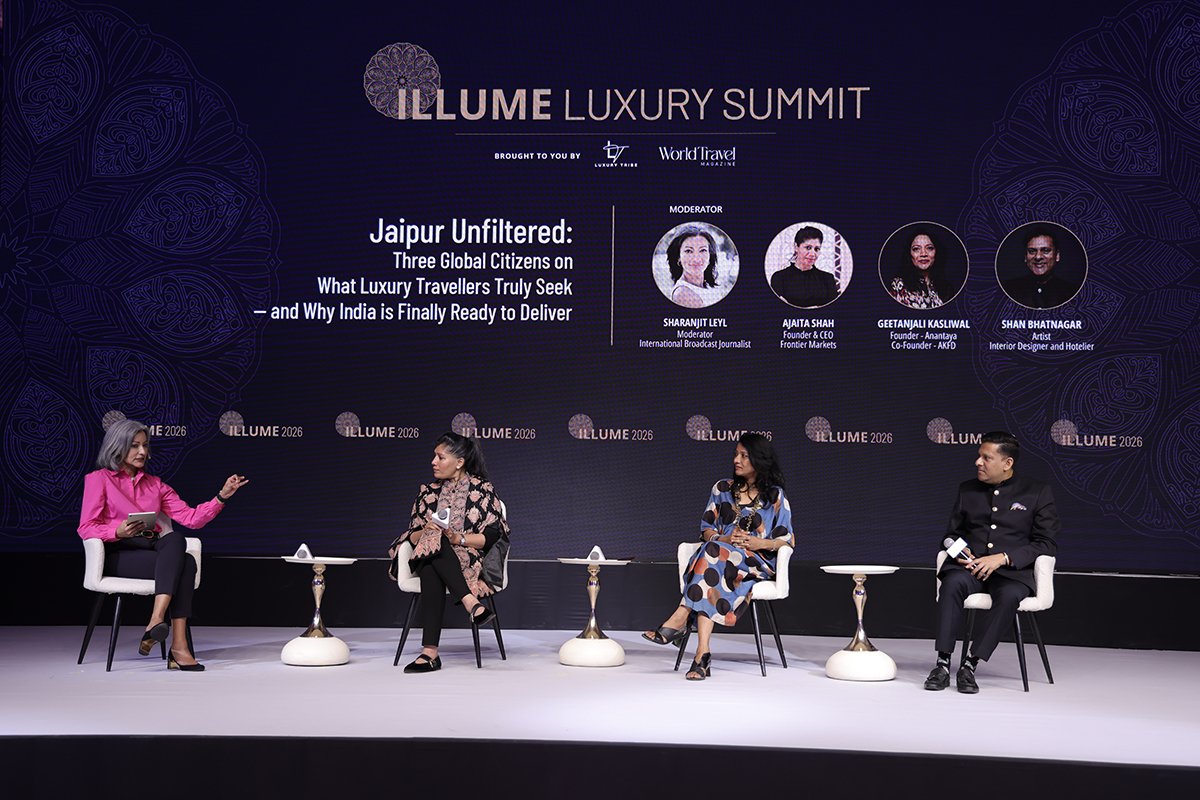
About this session: Jaipur Unfiltered was a panel convened to hear India’s discerning high-net-worth travellers speak candidly as travellers and, as custodians of Jaipur’s craft and heritage, as the people building what that market seeks. The conversation set out to surface what luxury means at this level: effortless service and refined restraint, authenticity that is lived rather than staged, conscious luxury, and a warning to international brands circling Indian heritage properties. It brought together Ajaita Shah (Founder & CEO, Frontier Markets), Geetanjali Kasliwal (Founder, Anantaya), and Shan Bhatnagar (artist, interior designer and hotelier). This session formed part of Illume 2026 by Luxury Tribe, held in Jaipur, the invitation-only forum where India’s luxury travel trade speaks candidly about the market it actually operates in.