

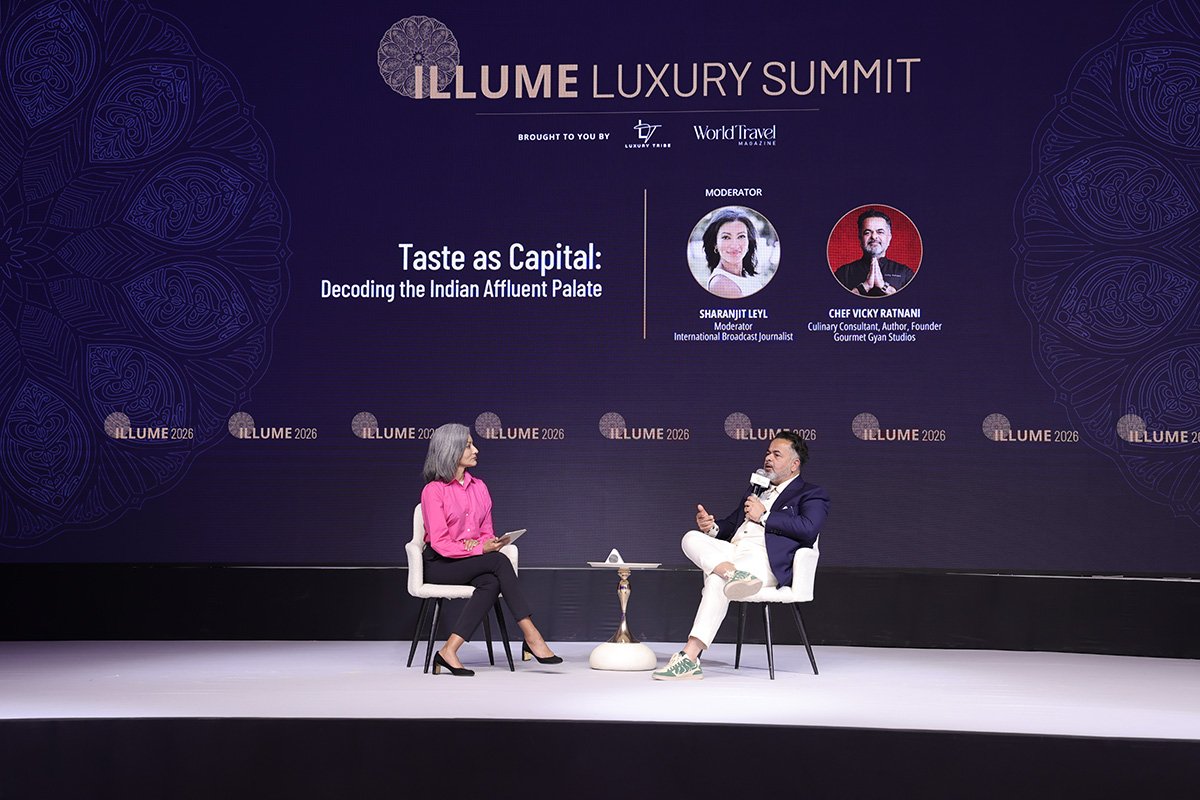
Taste as Capital: Decoding the Indian Affluent Palate
Illume Intelligence | From the Illume Knowledge Series
From Panel: Taste as Capital — Illume 2026, Jaipur
The most persistent mistake international hospitality makes with the Indian guest is treating them as a problem to be solved. Chef Vicky Ratnani, in conversation with Sharanjit Leyl to close Illume 2026, reframed the entire question in a single line that the rest of the session kept circling back to: the Indian traveller does not need to be accommodated. He needs to be understood.
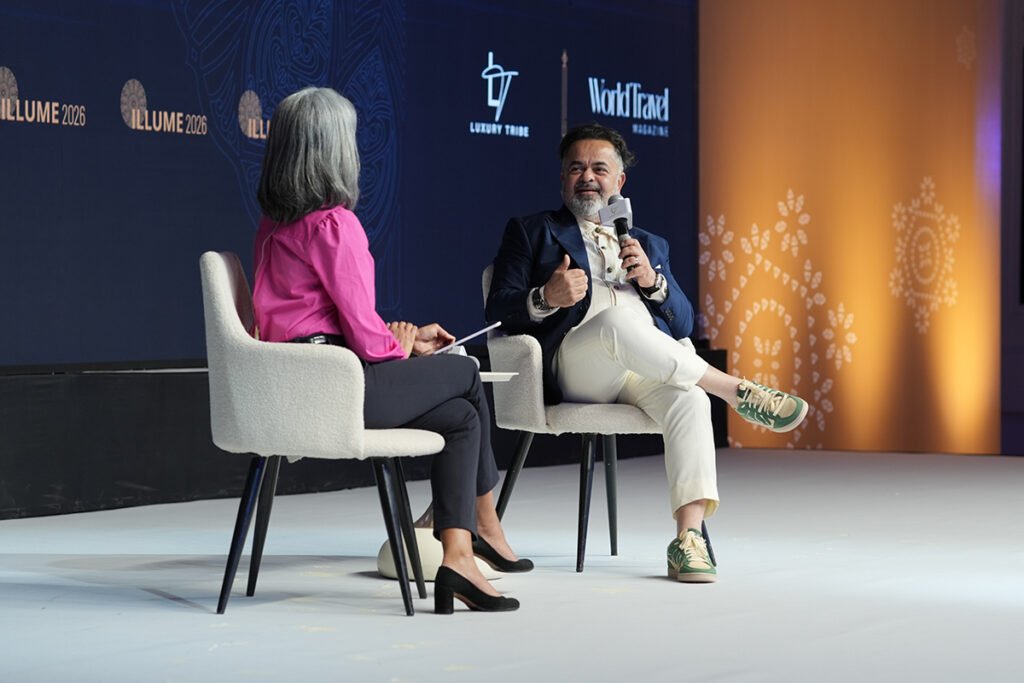
The distinction is not semantic. Accommodation is what you offer someone whose requirements are an inconvenience. Understanding is what you extend to someone whose standards you respect. Ratnani’s argument, built across food, vegetarian dining, the next generation of diners, and the future of the meal itself, is that the Indian affluent palate has earned the second posture, and that most of the industry is still operating on the first.
His starting point is that Indians are not habitual eaters clinging to the familiar, they are discerning eaters spoiled by abundance. In a country where the food changes every fifty kilometres, the result is a population with an unusually developed sense of what good tastes like. The new Indian traveller, he argued, is open to everything.
“The Indian will enjoy an omakase in Tokyo. He’d love a wood-fired pizza in Naples. And at the same time he’d love a thali back home. If you come across as original, offer a craft, and make them feel welcome as part of their culture — then it’s a win-win.”
— Chef Vicky Ratnani
That breadth is the context for his most direct challenge to the industry’s assumptions: vegetarian food is not a dietary restriction. Ratnani has little patience for the lazy version of vegetarian catering, taking a plated dish, removing the protein, and serving the accompaniments as though that constitutes a meal. That generalisation, he warned, takes a kitchen straight down the rat hole. In India, he said, vegetables take centre stage, and the craft is to treat them accordingly.
His reframe is what he calls the protein flip, a principle he picked up at a plant-forward conference in California. Instead of steak with mushrooms on the side, you serve mushrooms with a little steak on the side. The point is not deprivation; it is celebration, of the harvest, of the season, of the vegetable as the hero rather than the consolation. A well-crafted vegetarian menu, he argued, needs the same architecture as any other: balance of colour, texture, flavour, protein, and carbohydrate. And Indian cuisine, in his view, is built for exactly this.
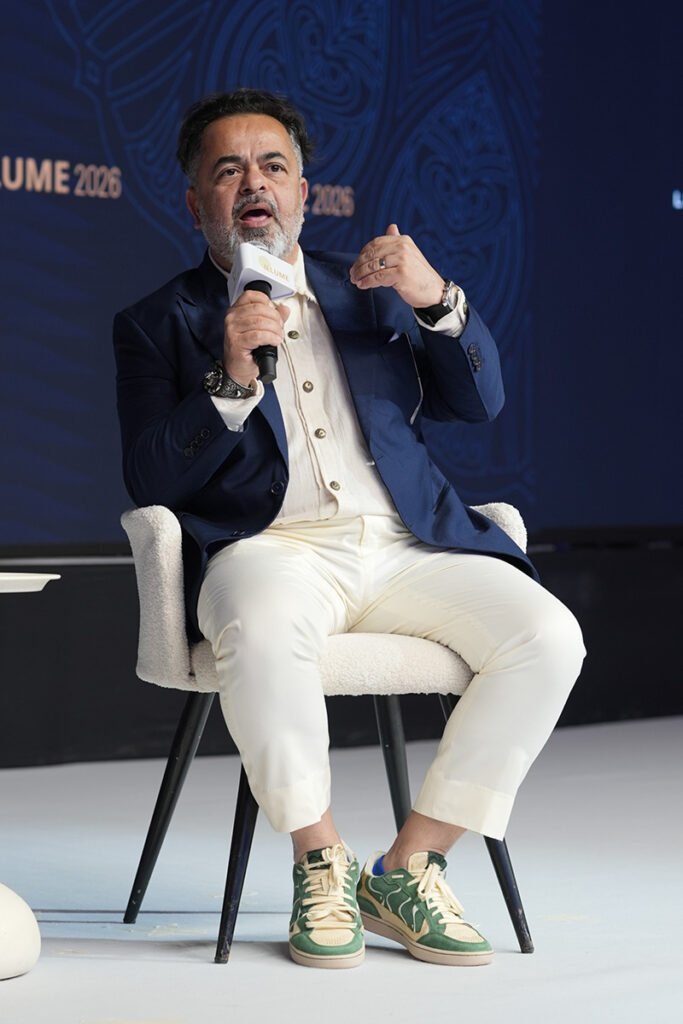
“In India our food is like a soap opera. There’s a lot of drama in it. You’ve got the fermented funk from the pickle, the crunch from the papad. There’s a lot of ways to create a real wow factor with vegetarian food.”
— Chef Vicky Ratnani
He spoke from direct experience, having turned vegetarian himself for the three seasons of his show, not as performance, he said, but as genuine exploration of what becomes possible when meat is simply removed from the pantry. His conclusion was characteristically blunt: meat is meat, but there is a great deal more character in vegetables. For any property serving Indian guests, the operational lesson is plain, a vegetarian guest who recognises that real effort and creativity went into their food will know the difference, and a guest fobbed off with leftovers will know that too.
On what turns a meal into something people travel for, Ratnani drew a line past the industry’s current obsession. The future, he argued, is not experiential dining but meaningful dining, food made because there is a reason and a philosophy behind it, not merely to fill a stomach. Ambiance, environment, smell, and craft all matter, but they serve the originality and earnestness at the centre. People travel for the produce, the idea, and the evident care, not for the theatre alone.
The generational shift gives this real urgency. Ratnani located today’s most important diner in the 24-to-early-50s band, including those who have made wealth through startups and crypto, and described them as the most informed and demanding market Indian hospitality has ever served. Digitalisation, food groups, culinary tourism, and access to travel have produced a diner who arrives already briefed.
“Today’s diner has already studied the menu. They’ve read the reviews. They know the head chef’s name, they know who did the decor. Six out of ten travellers already know you before they arrive. This is not the age where you put anything on the table and it flies.”
— Chef Vicky Ratnani
This is where “taste as capital” becomes literal. Information is now the diner’s currency, and the promise a property makes has to match the reality the guest has already researched. His advice to the operators he consults was the opposite of reinvention: pick your skill set, be yourself, study your market. Honesty above everything, because, as he put it, you cannot fool people anymore, the input is equal to the output.
He closed where he began. The Indian guest is not asking to be catered around; they are asking to be comprehended. Even the guest who genuinely wants nothing more than dal chawal will recognise, and reward, the creativity and effort applied to it.
“If you really do the right thing — with honesty, with integrity, and the freshest produce — they’ll come back. You can’t go wrong.”
— Chef Vicky Ratnani
For hotels, restaurants, and destinations courting the Indian luxury traveller, Taste as Capital reframes food from a logistics problem into a relationship. The affluent Indian palate is global, rooted, and informed in equal measure, and it holds those things to the same standard. Properties that meet it with genuine craft rather than generic accommodation are not just feeding a guest, they are earning the return visit, and the word of mouth that travels with it.
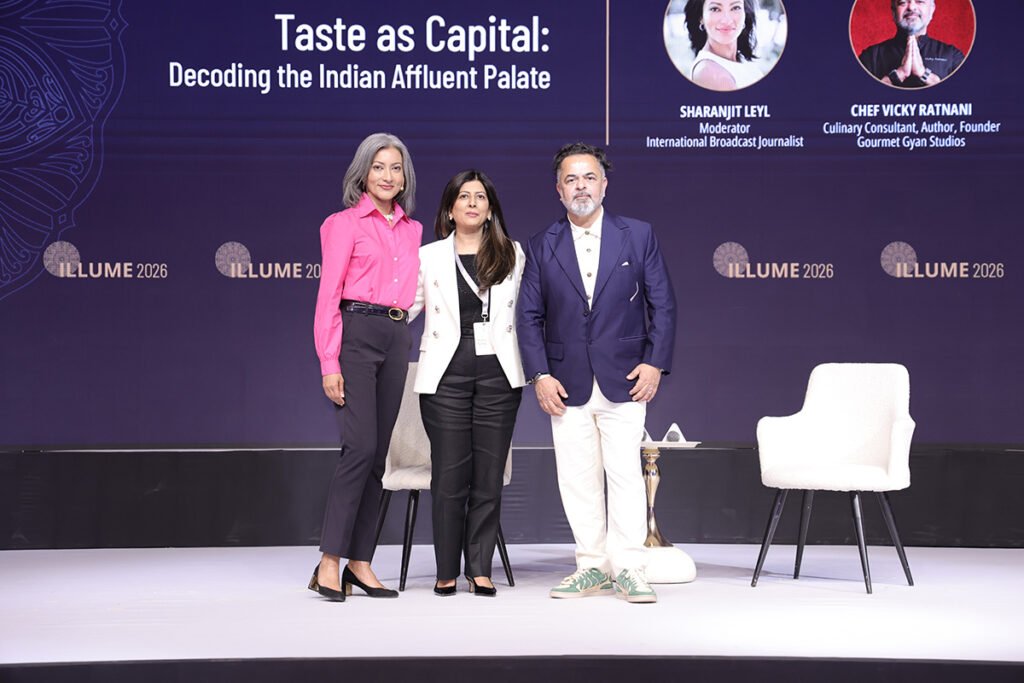
About this session: Taste as Capital was a closing conversation convened to decode the Indian affluent palate, global, rooted and informed in equal measure, and what it demands of the properties courting it. The discussion set out to surface a reframe of the Indian diner: understanding over accommodation, vegetarian food as craft rather than restriction, meaningful dining over mere theatre, and a new generation of diners who arrive already briefed on the menu, the chef and the reviews. It featured Chef Vicky Ratnani in conversation with Sharanjit Leyl. This session formed part of Illume 2026 by Luxury Tribe, held in Jaipur, the invitation-only forum where India’s luxury travel trade speaks candidly about the market it actually operates in.